Our top ten biggest successes from this summer’s vegetable garden

We’ve had a bumper crop here at Greatrakes this summer, with plenty of varieties of fresh vegetables to choose from – here are the ten top performers, with some notes on each.

A small section of the vegetable garden at Greatrakes

#10 Potatoes

We planted two beds of potatoes this season – one each of Desiree (red skinned) and Sebago (brown skinned), plus an old plastic garbage bin with some overflow Sebagos. From both we managed to harvest a total of 15kgs of potatoes this summer. Approximately half were quite small, but perfect to steam whole for potato salads, while some were incredibly large, making for perfect home-made, chunky-cut chips.

Just some of the tasty spuds to come out of our garden this summer

In hindsight, we probably should have watered them a bit more – as we started getting low on rainwater, and before I’d hooked up a hose to the bore, the potatoes were one of the crops that we eased back on. Most likely this is what gave us so many smaller spuds. They were relatively disease free, with only minor predation of the leaves from what I assume to have been earwigs earlier in the season.

This season’s growing method was the “lasagne” method, where the seed potatoes were planted into beds with only a foot of soil, then as the plants emerged they were topped up with alternating layers of sugarcane mulch, sheep and alpaca manure from the paddocks, more sugarcane mulch and a dried manure purchased from Bunnings with the dubious brand-name of Whoflungdung, the tag line from one of those jokes that you’re no longer allowed to tell in today’s ‘woke’ society.

#9 Mustard

I literally planted this on a whim, in one quarter of a raised garden bed where I had recently harvested a late crop of cabbages. Other crops in the bed were still developing, so I wanted something fast-growing that could fill the hole – ordinarily I use beetroot or lettuce for this, but as we were in the midst of a fortnight of searing hot days at the time, I was finding it tough to get them established. The mustard seeds however, germinated within a couple of days, and once they emerged they never looked back.

Mustard in full flower

With all of our cabbages and cauliflowers having already been picked, the mustard plants (and our horseradish as well) became the focus of the local population of Cabbage White Butterflies, and it became a regular morning ritual for us to spend an hour before work picking off the green caterpillars that were so well camouflaged, and feeding them to the wrens and wagtails that would eagerly line up for them.

After a bumper crop of flowers, the plants began forming seed heads en masse, and I watched each day for them to start drying out. Eventually it got to a stage where a few heads had started to split, and with extremely hot weather forecast for the remainder of the week, I harvested three large brown paper bags full of the uppermost seeds. As a lot of the lower seed pods were still a little green, I decided to leave picking them for a future date – of course, this never happened, and by the time I removed the dried plants at the end of the season, there were hundreds of new mustard plants emerging below them.

So far I have managed to process only one of the bags of seed heads, while the other two are still in storage in the garage – from the seed that we gathered in that one bag, we had enough to produce a full jar of delicious, hot whole-grained mustard, enhanced with a local beer from nearby Tooborac, and some honey from Beechworth.

#8 Sweet corn

I’d never really grown sweet corn before, having never had enough space in the garden until now – so I did some research beforehand and came to the conclusion that for the greatest success it would need to be planted in clumps rather than straight rows due to the way it is pollinated.

Sweet corn ‘Early Extra Sweet’

Therefore, I dedicated an entire raised bed to production of corn, and set about planting two lots of F1 hybrid varieties, Early Extra Sweet and Snow Gold Bicolour. My first mistake was to plant the Early Extra Sweet on the sunnier side of the bed – despite being planted at the same time as the Snow Gold Bicolour, it germinated and grew to fair size a full week or two before the other variety even started sprouting, meaning it was constantly shading the later growing variety behind it. The second mistake was to plant the two varieties together – apparently Snow Gold Bicolour doesn’t taste anywhere near as nice when it is cross-pollinated with other varieties.

Not that either mistake made a huge impact, although it was noticeable that the Snow Gold Bicolour produced less viable heads, and the Early Extra Sweet was definitely the nicer of the two to eat. With the corn really starting to get going at around the same time as I got the bore set up for the watering, it meant that we were able to keep the water up to it. The Early Extra Sweet started flowering right at the time that we had a few very windy days, and combined with a lot of activity from the local bee population, we were able to produce more than enough heads to keep us and our visitors munching on extra sweet, extra juicy corn-on-the-cob for most of summer.

I think next season I will stick to the one variety, possibly in two separate patches, and I may stagger the plantings by 2 or 3 weeks to get a longer growing season. I may also look at planting some heirloom varieties next time around so that I can collect my own seeds, but given the amazing flavour of the Early Extra Sweet F1 hybrid, it’s going to be hard to resist planting more of that variety again.

#7 Capsicum

Raised from seed sown early in the spring and planted out in November, my chilli plants have seen mixed success, largely because of where and when they were planted (underneath a nectarine tree in a fairly dry, shaded spot). The only ones to really shine have been the capsicums, especially the California Wonder variety that were planted at the front of the bed and therefore received the most sun.

Capsicum ‘California Wonder’

Unfortunately while they were being established we were transitioning from using the rainwater tank to using the bore, and most of the chillies probably didn’t get enough water to thrive – certainly none of them died, but they were very light on for fruit. The California Wonders however produced masses of big, green capsicums that were juicy and delicious.

Also bountiful was a miniature variety, with several plants producing masses of yellow, red and orange fruit – practically though, I’m not really sure they were worth the effort as the fruit are in fact very small. Probably next season I’ll concentrate on raising a few more California Wonders from seed.

#6 Basil

OK, so technically it’s a herb, and not a vegetable, but our enjoyment of this year’s bumper harvest would certainly have been lessened, were it not for the masses of basil that we were able to pick this season. From the Genovese, Lemon and Thai varieties that I grew in the greenhouse through the full summer heat, to the green and purple-leaved varieties of Sweet Basil that we planted around our egg plants and strawberries, we have been able to pick basil pretty much all summer, and it’s been a welcome addition to tomato and pasta dishes, in salads and on bruschetta, and I’ve frequently harvested the Genovese variety pictured in the foreground above to produce the most amazing pesto I’ve ever tasted.

Genovese Basil in the foreground, with Thai Basil and Lemon Basil growing beside it.

#5 Egg plant (Aubergines)

I’ve never been a big fan of eggplant – I’ve always found that most of the traditional ways it’s been served to me, it’s had an oily, almost slimy texture that has made it far less appealing than other vegetables. So the only reason we ended up growing it this year was purely by accident. By that, I mean that I had wanted to grow some of the little marble-sized Thai eggplants that are traditionally used in Thai curries, but when I ordered the seeds, I mistakenly ordered a variety called ‘Thai Purple Ball’, which, it turns out, produces traditional, tennis-ball sized globes of dark purple. By the time I realised, I had returned from overseas with a glasshouse full of seedlings, and no time to order and establish a fresh lot of seed.

A healthy Bonica egg plant

Later on in the spring, after harvesting a stack of beetroot, I also had a hole big enough for a few established plants, and after spotting some advanced Bonica seedlings at Bunnings on sale, I decided to go with three of them.

Egg plants love plenty of heat, and we had that in abundance this year, so both varieties really turned it on. By late February we were picking 1 or 2 giant Bonicas and the same number of Thai Purple Ball each day, and we were desperately scouring the recipe books for new ideas. Thankfully, Vanessa is a wonderful cook, and some of the recipes she discovered have become staples in our diet now, including an amazing hybrid moussaka/lasagne dish, and a smoked egg plant dip, that when accompanied with our home-raised lamb, made one of the best dishes I have ever tasted.

Bonica and Thai Purple Ball egg plants

What we couldn’t eat, we took into the office whenever we made the journey in to Melbourne, and they were all greedily snapped up. I’ve definitely changed my mind when it comes to growing egg plant, and look forward to trying some new varieties next season.

#4 Cucumbers (and other cucurbits)

Our cucurbit production got off to a very late start this year, largely in part to several rookie errors on my behalf. I’d actually started them off early, planting a number of varieties of cucumber, zucchini, melons and pumpkins into jiffy pots late in the winter, that I kept in a tray indoors. Unfortunately, with the cold September that we had, it was still too early to plant them out into the garden, so before we went overseas in October, I moved the tray into the greenhouse. Of course, I forgot to warn my mum, who was looking after the watering of the greenhouse, that they were in their own self-watering tray, so when we returned in early November, most of them had dissolved into a mushy mess, and those that hadn’t were barely clinging to life. To make matters worse, the few salvageable plants I did put into the garden really struggled in the heavy soil, and with an exceptionally wet spring, had all but died by the start of summer.

Cucumber ‘Marketmore’

So in early December I invested in some better quality soil, created some raised mounds in the garden, and planted some new seeds, three to a hole, in the hope that we would at least get something. And get something we did – for the most part, due to the lateness of their establishment, each plant has only produced one or two fruits, but the quality of what has been produced has got me really excited for what can potentially be achieved in our garden in the future.

The cucurbit garden

The biggest successes have been the cucumbers and zucchinis, both of which have produced enough to keep us well fed throughout the summer. The cucumbers in particular have been plentiful enough that I have been constantly bottling dill pickles throughout February and March. In fact, I even managed to get a couple of established plants going in straw bales as a replacement for a failed crop of beans, growing up a trellis, and these too produced heavy crops that were perfect for slicing and pickling.

A ripe Honey Dew rockmelon ready to pick
Rockmelon ‘Cantaloupe’

The three varieties of melon I grew – Charlestone Grey watermelons and Honey Dew and Cantaloupe rock melons, each only produced one or two fruits, but the quality was amazing, especially the watermelon, which was incredibly sweet and juicy despite the dry summer. I’m not a big fan of Cantaloupe either, but Vanessa tells me that the first one we picked this year was delicious.

Slices of ripe Cantaloupe rockmelon

We’re yet to pick the pumpkins – most of which I grew from seed we collected from store-bought fruits, but they’ve each got some nice looking crops to pick. The standout has been the Butternut Squash variety, which has produced several very large pumpkins that we’ll look forward to eating later in the year.

Pumpkin ‘Queensland Blue’
Pumpkin ‘Butternut’
Pumpkin ‘Kent’ (Jap)

#3 Bush beans

I really learned some lessons this year with the different varieties of beans I planted. The first, and most important, was that despite the success of other crops such as tomatoes and cucumbers that I planted into straw bales, the shallower rooted bean plants really struggled in the summer heat, and by the time the climbing beans had established a deep enough root system to start producing crops, it was very late in the season. I also found that the Borlotti varieties I’d planted, grown for the seed itself rather than the whole pod, failed to thrive in either the straw bales or the garden bed, and certainly didn’t produce a crop anywhere near worth the effort to grow them.

Bush beans thriving underneath climbing tomatoes

The standout however, were the two varieties of bush, or snap beans that I grew in the raised beds underneath some climbing tomatoes – Cherokee Wax, a type of butter bean (yellow) and Gourmet Delight (green). The first variety to crop was the Cherokee Wax, and they were producing around a kilo of beans a week from a dozen plants at the height of their season. A couple of weeks after them, the Gourmet Delight beans started coming on, and as the first lot of Cherokee Wax plants started to fade out, the green beans hit their stride, producing nearly 2 kilos of beans from the same amount of plants on a weekly basis. My only complaint was that the beds I had planted them in were only 350mm high, and at one stage I ended up with a bulged disc in my back after bending down for too long picking them – next season I’ll keep them and other heavy cropping varieties in the 700mm high beds that are far easier to pick from.

A mix of Cherokee Wax and Gourmet Delight beans

#2 Beetroot

Sorry tomato lovers, but by far my favourite vegetable to grow, pick and eat is beetroot – and this season we have produced tons of it. The standard Aussie go-to for a salad or a burger is a slice of pickled beetroot, and whilst I don’t dislike the stuff that comes in a can, I will say that once you’ve made your own, you’ll never go back. I have pickled so much beetroot this summer that you’d think I’d be sick of it, but far from it – it’s been on the lunch and dinner agenda for many a fine meal this summer.

Sliced, pickled beetroot

Stick your head inside the kitchen at Greatrakes on many a Saturday afternoon this summer and you’ll likely have heard the sounds of the Cosmic Psychos’ ‘A Nice Day to go to the Pub’ echoing from the Bluetooth speaker on high-rotation, with the classic line, ‘Nice day to have some beetroot, have some beetroot, have some beetroot’ pumping out, while a saucepan of pickling brine bubbles away and another pile of sweet, earthy beetroot slices await the pickling jar.

Thinning out rows of beetroot allows you to pickle some of the ‘baby beets’

As well as the traditional red varieties Early Wonder and Detroit Red Globe, we’ve also grown Golden Detroit this year, which produces orange flesh, as well as the Italian variety Chioggia, which has concentric rings of pale pink and white.

Pickled Chioggia variety beetroot

Of course, it’s not only about the pickling, and there’s been several long lunches this summer where one of the star attractions has been freshly roasted beetroot. We’ve also enjoyed a number of salads with the delicious young leaves scattered through them – visually very pretty, and tasty and nutritious as well.

Young beetroot plants

The highlight for me about growing beetroot, and the reason why you’ll rarely find us without at least one or two patches of it growing somewhere in the garden, is that it’s so quick and easy to grow, and so versatile right throughout the growing season – you plant it in clumps and then use the young leaves in salads as you thin the rows out, and again harvest the baby beets for salads or pickling whole, until you’re eventually left with a row of evenly spaced, large beets that are perfect for slicing or roasting whole. The perfect, year-round vegetable, in my humble opinion.

#1 Tomatoes

A vegetable garden wouldn’t be complete without at least one tomato plant, and this summer at Greatrakes saw us growing dozens of them. Some of the first plants were established way back in July, grown in Jiffy pots indoors and then transplanted into pots to be grown-on in the greenhouse, before eventually making it into garden beds as one of the first chores upon arrival back from our overseas holiday in early November.

Oxheart Red tomatoes beginning to ripen

There were many varieties we trialled this year, in raised beds, straw bales and even some in pots, and while the results weren’t always as expected, for the most part they performed beyond expectations. Some of the standouts this year were Thai Pink Egg, a prolific cropper with pink egg-shaped fruit exactly as the name suggests, Black Cherry, an indeterminate (climbing) cherry variety that has rarely been without fruit, Oxheart Red, a slicing variety that produces thick, juicy fruits with very little seed, and of course the faithful standby Roma – the staple of any good tomato sauce.

A handful of Thai Pink Egg tomatoes
Thai Pink Egg Tomatoes start off yellow before ripening to a pinkish-red

Other varieties that I grew from seed that are worthy of mention have been Tatura Dwarf, a locally raised determinate (bush) variety that produces wonderfully heavy crops of smallish to medium sized slicing fruits, and Principe Borghese, with its heavy crop of cherry-sized red tomatoes that are perfect for sun drying or slow roasting.

Thai Pink Egg and Principe Borghese tomatoes sliced and ready for drying
Fresh out of the air fryer
Stored in a good quality olive oil, ready for adding to sandwiches, salads and charcuterie platters

The were a few failures that came about from the same issue as I mentioned earlier with my cucurbit and chilli seeds – those that had germinated in Jiffy pots before our trip but had been too small to plant up, ended up in the greenhouse among all the other seedling trays, and were accidentally overwatered while we were away. Varieties that I had looked forward to growing, such as Money Maker, Grosse Lisse, Tigerella, Rouge de Marmande and San Marzano, ended up being confined to the compost heap, and whatever varieties I could find at Bunnings to replace them with were adequate, but hardly set the world on fire.

Indeterminate Oxheart tomatoes trellised and growing in straw bales

The only variety from those that I did end up growing successfully from seed that I would still consider a failure was one called Ram’s Horn – an oddly shaped Roma type of determinate tomato that I found to produce far too many leaves compared to fruit for most of the season, and was highly susceptible to blossom end rot in hot weather, despite receiving the same amount of fertilising and watering as the far more prolific Thai Pink Egg and Roma that were grown in the same bed. Of the store-bought varieties, they’ve all mostly performed OK, although the Black Russian variety has been prone to splitting and I probably wouldn’t bother with that again.

‘Rams Horn’ produced abundant foliage, but struggled to produce much in the way of quality fruit

All in all though, the tomato crop this season has been phenomenal, and we have easily picked in excess of 15 kilos of fruit – probably closer to 20kg. Much of that has been from the cherry tomatoes – Thai Pink Egg, Black Cherry, Principe Borghese and a couple of self-seeded varieties that have sprung up elsewhere in the garden. These we have used to make semi-dried tomatoes, sauces, and my absolute favourite – confit tomatoes, slow-roasted in olive oil and bursting with sweetness.

A morning’s harvest
One of many different sauces we made with our tomatoes this year (using our own garlic, basil and red wine)

Next has been the Roma tomatoes, producing enough tomatoes from a half dozen plants to make up several litres of passata, along with dozens of bottles of tomato sauce. Not to be outdone, the larger slicing varieties, particularly Tatura Dwarf and Apollo, have also given us enough fruit to keep our salads and sandwiches will filled. Oxheart Red has also been a prolific producer that fills the gap between paste (Roma) types and slicing varieties – if I had one complaint about it though, it’s that while it produced some good fruit early on, it was fairly sparse during the hottest part of the season, and it has produced a huge crop of tomatoes right at the end of the season when they are struggling to ripen. Still, if you are like me and love a good green tomato chutney, then you’re certainly well provided for.

The last of the season’s green tomatoes, ready for chutney
The finished product – sweet, sticky, and highly addictive

We aren’t planning on taking any holidays this September-October, and with the new greenhouse now up and running, I’m hoping next season will see us trying a heap of new varieties, depending on what seed I can get my hands on between now and then. One thing’s for certain, even if the next season is only half as good as this one, tomatoes will surely be the mainstay of our summer production here at Greatrakes.

More tomatoes ready for processing

A change of direction

For anyone who has been hanging on all this time wondering what the hell happened at Greatrakes over summer, you’ve probably realised by now that I’ve decided to take the blog in a different direction, and rather than providing monthly updates, from now on I’ll be adding content whenever I feel the urge to do so – which may be several times a month, or maybe not for a few months at a time. So to tie up some loose ends, let’s just say that summer here was very late in arriving (in Axedale we only had one day in November that just managed to sneak into the 30s), however once it had finally done so, it came with a vengeance. For the last three months we have been baked dry with searing heat and very little rain – on the rare occasion that storms did form up in Central Victoria, we watched despairingly as they slid away to the east and west of us. Meanwhile to our north, in Queensland and across the top end of Australia, there have been record rains and devastating floods as the third year of La Nina drew to a close. For a year that had been as wet as it was though, here in Axedale we ended up watching our paddocks turn to dust, and by late February we were forced to bring in a couple of rolls of hay to supplement the dwindling supply of grass for the sheep and alpaca to eat. Thankfully we received a healthy drop of rain at the start of March, and a couple of days of good follow-up rain towards the end of the month – not enough to refill the tanks yet, but enough to get some green back into the fields.

Luckily here at Greatrakes we have an excellent bore that produces water that’s technically drinkable – as the rainwater tank behind the garage that I use for my vegetables started to get lower, I invested in some new hoses and hooked up a watering system to the bore for us to get through – and what a success that was, with bumper crops of beetroot, garlic, spring onions, mustard, beans, strawberries, basil, eggplants, sweet corn, cucumbers, zucchinis and tomatoes. For the first time in twenty years we’ve had a garden that we’ve been able to utilise to grow substantial amounts of produce – in fact this year we’ve hardly had to buy any vegetables, apart from those that we didn’t grow enough of last year (such as garlic, onions and potatoes), or those that we’re still waiting to finish cropping (such as pumpkins, sweet potatoes and melons).

We’ve picked at least 15 kilos of tomatoes alone this season – with many going towards making passata, sauces and confit, as well as being given away to friends and family. I’d have to say, despite my love of several of the sauces I’ve made, including some extra tangy and smoky BBQ sauce, it’s hard to go past the confit cherry tomatoes, either in a pasta dish or piled into a hot toasty – absolutely delicious little bombs of explosive, sweet flavour that are truly exquisite.

Over 10kg of potatoes came from just two raised beds, but unfortunately that still wasn’t enough to tide us over, so next season we’ll be increasing our crops exponentially. This was the first time that I’d tried growing potatoes using the layering method, where you let the plants poke their heads out of the ground for a bit before covering them with another layer manure and straw – repeated several times throughout the growing season, it saw us gather more than seven kilos out of each of two raised beds. Unfortunately, before I had hooked up the bore I had been using the rainwater tank and had tried to go sparingly as the dry summer wore on, sacrificing some of the watering that should have been going to produce big spuds – an error that resulted in about 4kg of the total 15kg being on the small side. Nonetheless, these were perfect for using in potato salads, or roasting tom make our own version of ‘pommes noisettes’.

I’ve never been a big fan of eggplant, but this year with all of the summer heat, our crops have been huge, and Vanessa has tried her hand at a couple of variations that have made me rethink this whole ‘not liking eggplant’ deal. In fact, I’d have to say that the roast leg of lamb (from our own paddock) that she recently cooked and accompanied with a smoky eggplant sauce using eggplants from our garden, washed down with our own wine that we produced this year at Shiraz Republic, would have to have been one of my all-time favourite meals!

I grew a small patch of garlic last winter from on bulb that we’d bought from the supermarket that had started to sprout – it produced enough bulbs to get us through the summer and make a valuable contribution to our sauces and pickling mixes, but sadly we’ve now had to resort to buying it again, so this year I’ve purchased a stack of bulbs of four different varieties, and we should be looking at enough garlic for us to be self sufficient for the next twelve months.

As far as mustard goes, I planted a small patch as a cover crop in one quarter of a raised bed, after I had harvested a crop of cabbages earlier in the season. Despite massive predation by cabbage white butterflies (which we would counter by spending about an hour a day picking off the caterpillars and feeding them to the birds), they produced a bumper crop of flowers, followed by so many seed pods that I gave up picking them all after filling three large paper bags. This turned out to be a big mistake, as the remaining seeds dropped everywhere, and I reckon I’ll be pulling mustard seedlings out from around my crops for many years to come. Still, with each paper bag full of pods producing enough seed to make a full bottle of the most delicious wholegrain mustard, we won’t be needing to buy more of that any time soon, so that has to count as a win, right?

When it comes to vegetables, I really love changing people’s minds about beetroot – it always amazes me when people say they don’t like beetroot because the only time they’ve ever experienced before is the soggy sliced stuff you get from a can. This summer we have rotated crops of beetroot throughout the season, growing several different varieties including the regular red beets, as well as golden varieties and even a striped variety that turns white when pickled! We’ve pickled most of the beetroot, both as slices and whole baby beets, but we’ve also roasted some to produce the most amazing flavours imaginable.

Meanwhile Vanessa has devoted much of her free time this summer to establishing a Dahlia garden. It’s been a tough year, but finally the hard work and hours of hand watering with a hose attached to the bore has paid off, and the house is currently filled with stunning blooms of all shapes and sizes. She’s also been paying close attention to the watering and dead-heading of the many hanging baskets that we have hung along the verandas at the front and back of the house – the pink and purple petunias along the front make a striking display as you approach the house, while out the back the cheerful mass displays of Calibrachoa and Bacopa perfectly compliment the gorgeous views out to the west.

Apart from the successes in the garden, and my continued slow recovery from Legionnaire’s Disease, the other thing of great note this summer has been the addition to our family of another German Shorthair pup – Mathilda, a gorgeous girl with a dark brown coat and a little patch of white hair on her chest – her father was a very tall dog and the speed at which her lanky legs are growing makes it look like she could be the same. After a few days of sorting out their pecking order and the ownership of various toys, Heide has really bonded with her new little sister, and the two have become great playmates (or partners in crime as the case may be). Reinhardt is far less enthusiastic about the young one’s eagerness to play all the time, but when things have eventually quietened down of an evening you’ll usually find the two of them curled up together on the same bed.

As far as work around the house, there hasn’t been a lot that we’ve been able to accomplish due to the heat. We did manage to build a new glasshouse though, thanks to an insurance pay-out after our last one was destroyed in a freak wily-willie (otherwise known as a dust devil). We were both working in our offices one afternoon when we suddenly heard what sounded like a truck coming up the driveway. With the searing heat and the natural amphitheatre that our house sits in, it’s not uncommon of an afternoon to see multiple wily-willies dancing across the paddocks, and they’re usually fairly small and harmless, but on this occasion it ran along the length of the house, tearing the cover off the spa and picking up a half full recycling bin from against the back of the house and depositing it several metres away on top of a hedge. We both ran out to watch this tornado-like dust devil roar its way across our side paddock before turning and running back along the edge of the Mount Sugarloaf Nature Reserve across the road from us. As it blew itself out we walked around the back of the house to survey the damage and discovered our glasshouse had been lifted up and twisted in two like piece of paper.

To be honest, we weren’t holding out much hope of getting anything back from our insurer – we were already pretty much assured that we weren’t covered for all the damage to our fencing from the October floods, so the thought of trying to convince them that we’d been hit by a freak windstorm that came and went within a minute, seemed like an uphill task. Still, nothing ventured, nothing gained right? So we contacted ING and they sent out an assessor, who then came back to us with an offer for a cash settlement that would enable us to upgrade to a larger, sturdier model, made right here in Victoria by Sproutwell Greenhouses – provided of course we were prepared to build it ourselves.

Let me say, that as much as I am in love with the quality of the greenhouse, the instructions that came with the greenhouse (plus the fact that there were about 4 different versions of the instructions provided to us, each contradicting the previous), was almost enough to question whether it was all worth it. I’m sure I’ll mellow over time, as the new greenhouse really is a massive step up from the previous one, but right now I’d be hard pressed wanting to set up another one any time soon.

OCTOBER – NOVEMBER 2022: Water, water everywhere

This post, for reasons that will become obvious, is both very brief, and very late. October for us at Greatrakes was pretty much non-existent, due to the fact that we boarded a plane on the 6th of the month and jetted out to Prague for the start of a nearly month-long sabbatical in Europe. We left the house and dogs in the capable hands of my mum during that time, and only returned to Axedale in the early hours of November 3rd, having missed some of the wildest and wettest weather ever to have hit the region.

More rain

The big wet, as you will have seen from our previous posts, had actually been going for several months already, and with each downpour the flooding had been a little worse, so with a few days to go before our trip began, the last thing we wanted to see was another huge frontal system heading down from the north.

As October began, the floods from the 27th and 28th of September had finally started to recede, leaving behind them piles of debris stacked up against the fences of the lower section of our paddocks, with the fences completely pushed over in several places.

Luckily, with the help of a neighbour and a four-wheel drive, I was able to straighten them sufficiently to keep the sheep and alpaca confined, and to restore the electric fence along the creek line to working order, a day before we were set to leave the country.

The creek levels dropped before we left for our holiday – but for how long?

Fast forward to just over a week later, and in the early hours of the morning of the 14th of October, we were waking up on the Danube River in Austria to news that the rains back at home had reached biblical proportions, with dumps of over 200mm overnight throughout the catchments of Axe Creek and the Campaspe River. Lake Eppalock, which had been sitting at around 47% capacity when we moved to Axedale in late May, was now around 133% capacity, with water levels above 1.8 metres flowing across both spillways. In fact, so ferocious was the flow on the second spillway, that it had washed away the road below it. Of course, all that water was heading into the Campaspe River, and the first chance it had to escape its banks was at the McIvor Highway crossing at Axedale, which not only resulted in the road between Heathcote and Bendigo being cut, but also removed the entire road surface from a section just above the bridge, images of which were now making news across the globe.

The water levels reached to well above the dam, the highest since the house was built in 2015

We checked in throughout the day and night with mum to monitor the conditions, and despite the fact that the water levels had reached halfway up the final rise before the house’s ground level, plus the fact that the house was now literally cut off from all road access in and out, she seemed to be handling it quite stoically. The sheep and alpaca were all securely locked up in the top paddock, out of harm’s way, and the house was still very much high and dry, so she resigned herself to a couple of days indoors and soldiered on.

The sheep were certainly not in any danger of running out of food during October and November

Pastures aplenty, but fences – not so much

When we finally returned in early November, most (but not all) of the rain had cleared, and we were faced with the sight of paddocks towering with pasture. Unfortunately, the floods had completely destroyed around a third of our fencing, meaning that the livestock had to be confined to the top paddock until such time as I could erect a temporary electric fence across the main paddock to keep them from straying into the creek or the neighbouring properties.

Rosie surveys the acres of fresh pasture after all the rain.

Even then, the amount of pasture in the top paddock was way beyond the scope of the small flock of sheep that we had to keep down to a manageable level, and after sorting out the issue of getting them all shorn before the impending summer (if and when it finally arrived), we ended up enlisting the help of another Axedale local to come and slash the main paddock for us.

Picking & planting

In the meantime, the vegetable garden was finally starting to offer up some excellent produce, with rows of healthy cauliflowers and cabbages ready to pick, along with radishes, lettuces and carrots. A lot of the radishes, cauliflowers and cabbages ended up in various forms of pickled produce, such as piccalilli and sauerkraut, although I ended up having to throw most of the sauerkraut out a couple of weeks later due to it drying out (I’ll explain why in a moment).

The first of many cauliflowers from the garden.
Several of the cauliflowers ended up as delicious piccalilli

After harvesting the vegetables that were ready to pick, the most important job in the vegetable garden was to transplant all of the tomatoes from the glasshouse into the garden, as well as replacing the lettuce that had gone to seed with some fresh summer herbs. The tomatoes that I had experimented with planting out early were also doing well, as despite the rain and the cold days, there had been no frosts during our time away. I potted some of the seedlings up and planted the rest into raised garden beds, before refilling the planter box in the glasshouse with potting mix and a light top dressing of seed raising mix and sowing a bunch of different varieties of Basil and Dill. Little did I know it, but this simple action of emptying the remains of a bag of potting mix that had sat for a month in the glasshouse into a planter box would have a profound effect on the next two months of my life.

A bunch of radishes destined for the pickling jar
A big hearty Iceberg lettuce

Struggling to breathe

By the Tuesday afternoon of the week following our return to Australia, I started to develop severe asthma – or so I thought. Having been hit with bouts of it off and on throughout our European trip, I suspected it was just a return bout, and given that I had a journey into the office in Melbourne planned for the Wednesday anyway, I made an appointment to see my doctor in the city before work. He prescribed me another inhaler and a preventer and sent me on my way, but on returning to the office it was clear that I wouldn’t be able to do much, so I hopped back in the car and drove the two hour journey back home to bed.

The next day I felt worse and stayed in bed all day – by the afternoon I’d started to get hot and cold sweats. Given the wave of COVID 19 sweeping the state again, I took a Rapid Antigen Test (RAT) and expected the worst, however after a few minutes it came back as negative. The following morning my fever was running at 40 degrees, and I was struggling to even breathe lightly, so we called an ambulance. After testing negative on another RAT, and despite the advice of the ambos and the doctor on the virtual ED call that it was COVID and I should just wait it out at home, I insisted on making the trip into the emergency department. After passing yet another RAT and then lying in the waiting room for an hour, dripping with sweat and gasping for air, I was finally taken in for a chest x-ray before being sent back to the waiting room again. It wasn’t long however before the nurse came back in to inform me that I had a severe bout of what they suspected was pneumonia, and that I was being admitted to hospital immediately.

Things take a turn for the worse

Over the next two days my condition continued to worsen, despite the copious amounts of antibiotics I was being administered, until one of the doctors suggested they switch to treating me for Legionnaire’s Disease, given my recent history of working in a confined space with potting mix. Sure enough, within hours of the change in medicine, I started to come good, and I was finally able to go home on the Monday afternoon. The recovery from Legionnaire’s though is a very slow process, and the rest of November (and much of December) was pretty much a write off for me, both work wise and gardening as well.

We’ve all read the label hundreds of times, but how many people actually wear gloves and a mask when using potting mix?

A hearty drop

One thing that we were able to do during November was to finish bottling our own wine, thanks to the wonderful people at Shiraz Republic and their Rent-a-Row program. Given my lack of energy, I wasn’t able to do much myself other than stick labels on bottles, but Vanessa and our friends Jarrod & Aleisha did all of the heavy lifting to clean, fill, cork and seal 72 bottles of lovely Shiraz. I did manage to stick the labels on the bottles however – labels that I had designed myself based on an oil painting I had completed of a red gum by the roadside just near our house. As a tribute to our new home and location, we’ve named the wine “Sugarloaf Road Shiraz”. It’s drinking nicely already, but it should really start to peak over the next 5-7 years. If we can make it last that long…

SEPTEMBER 2022 UPDATE – aka, never go the early crow

With a few days left in the month and a looming overseas holiday to prepare for, I thought I’d be incredibly efficient this time around and get the September blog out early. Well, you know what they say – never go the early crow!

On the 26th and 27th of the month, after a long weekend of beautiful sunshine and warmer weather, the heavens once again opened over Axedale. Monday wasn’t too bad, with some light rain in the morning and a couple of brief heavy showers in the afternoon. Tuesday for the most part was much the same – I counted 10 mm in the rain gauge at 6:00 pm when I checked before dinner. An hour later that figure stood at 19.2 mm as a series of thunderstorms drove across from Heathcote towards the west (an unusual direction for our weather to travel, and one that often results in heavy rain).

The measuring station on Axe Creek at Strathfieldsaye sat at around 1.53 metres all day – well below the height it needed to reach to flood the road crossings nearby. By the time I went to bed it was still sitting at around 1.54 metres. So imagine my surprise when I woke (early) at 4:30 am to find it had just hit 3.12 metres!

As soon as it was daylight, I drove down to the road crossing at O’Brien’s Lane, where it was plain to see that this time around, the flooding was far more severe than in the past few weeks. The flood marker that sits above the road surface on the side of the bridge itself tops out at 2 metres, and whereas the water levels had hovered around the 1.4 – 1.6 metre mark previously, this time the entire sign was underwater, with the markers on the upper sign showing a level of around 2.4 metres.

Back at the house, my first port of call was the control box for the electric fencing, as it was clear that the water levels would now be high enough to be shorting out the bottom wire. What I hadn’t expected was just how high the water would be – as I approached the gate to enter the main paddock, I could see sheets of water all the way along the fence line, and fast flowing water cutting right across the paddocks at the base of the large red gum that usually sits quite a long way back from the creek edge.

Down by the creek, I could see the yellow warning signs that mark the top wire of the electric fence flapping wildly as the torrents of water slapped against them.

Alas, the fast flowing waters had also brought with them lots of debris, which had banked up against the fence in several places, pushing it over like it was made of paper. I’m hoping that once the water clears, it will just be a matter of straightening up the star pickets again, but I guess time will tell.

Thankfully, all of the livestock had plenty of safe access to higher ground, and now that the steers have gone I’m not too concerned about them wandering out before I have had a chance to straighten the fences.

So much like the last few days of August, it seems that once again the biggest falls for the month have come right at the end. And yes, with two more days to go, it is possible that yet again I’ve jumped the gun, however the weather bureau assure me that this is it for at least the next few days. And they’re never wrong now, are they?

SEPTEMBER 2022: Spring has sprung

If August was busy, then September at Greatrakes was absolutely frantic! Not only have we been gearing up towards our overseas holiday in October, but we’ve been making preparations for the change of seasons in the garden, and we’ve also been inundated with visitors.

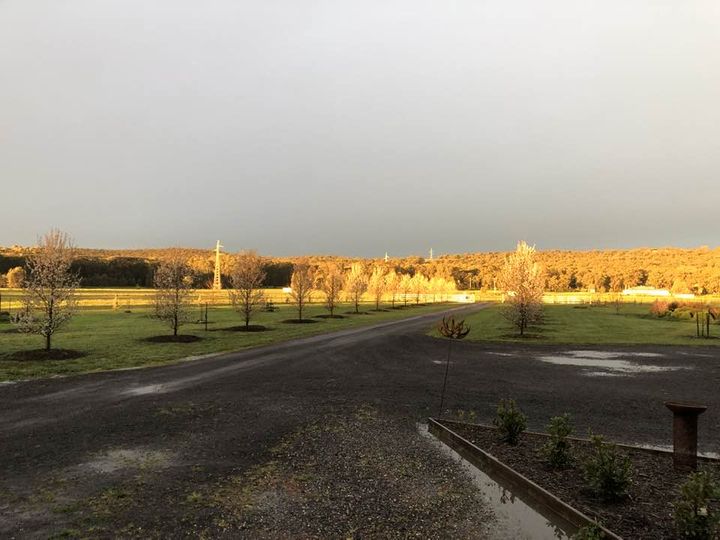
Golden hour at Axedale
Golden hour, the evening sun lights up the Sugarloaf after a storm at Axedale

La Nina 3.0

Axe Creek in flood at the O’Brien’s Lane crossing during September 2022

For the third year running it looks like we’re going to have a wetter than average spring and summer, thanks to the return of La Nina. Much of the ground in Northern Victoria is already saturated, and every new rain event brings fresh flooding. The Loddon and Murray catchments have been on flood-watch for most of the month, with weirs at Cairn Curran, Tullaroop and Laanecoorie reservoirs all spilling into the Loddon, and large water releases into the Murray from the Hume Weir at Albury.

Looking downstream from the O’Briens Lane crossing on Axe Creek

Closer to home, the Coliban and Campase rivers have been steadily flowing into Lake Eppalock, which may also spill in coming weeks. It’s currently sitting at around 85%, and is visible from the McIvor Highway at Derrinal, where it has started to back up into Mount Ida Creek.

Axe Creek reached a hefty 1.4 metres above the road surface at O’Briens Lane during September

Our own Campase tributary, Axe Creek, has been steadily flowing all month and has flooded on several occasions, with the water at the O’Briens Lane road crossing reaching a hefty 1.4 metres above the road surface.

Receding floodwaters in Axe Creek
Receding floodwaters in Axe Creek at the bottom of our paddocks

Thankfully we’re yet to see it burst its banks into our paddocks, although it has come mighty close to doing so twice now.

The dam seems to be holding at around 1/4 capacity

The minimal flows from off the paddocks into the dam have been enough to keep it stable at around 1/4 capacity – one of our long term projects over the next year or two will be to improve inflows and try to maximize water retention.

In the Glasshouse

We have ramped up our production of seedlings in the glasshouse this month as we start to head into warmer weather. The seeds that we germinated from the large red gum on the property have been potted up into tubes ready for planting out next March, and they are piling on the growth.

River red gums destined for planting in the bottom paddock next March

Our trays of marigolds and zinnias proved to be extremely bountiful, with an excellent germination rate on the marigolds in particular. Unfortunately, the zinnias were planted into trays of two different seed raising mixes, and the results in the Yates brand mix have been somewhat disappointing compared to those planted into my preferred Osmocote mix, which I sadly wasn’t able to purchase anywhere nearby at the time.

Zinnias and Marigolds.

The marigolds will make up the first lot of hopefully many annual displays for our new circular annual bed in the centre of the driveway, whilst the green-flowered zinnias will complement them in two triangular garden beds opposite.

Also growing in the glasshouse during September were plenty of celery, celeriac, bronze fennel and French breakfast radishes that have since made it into the garden, along with several varieties of tomatoes.

Tomato seedlings potted up for growing-on in the glasshouse

The very first crop that we planted, the mixed lettuces that we have been growing in the glasshouse, have reached a stage of maturity where we can’t keep picking the leaves as quickly as they are being produced, and I fear it’s only a matter of time before they start going to seed. We’ll most likely pull them up soon and switch to the ones we’ve got growing in the outdoor beds. I plan to grow some herbs such as Dill and Basil in the raised garden bed instead over the warmer months.

Our glasshouse grown lettuce crop has been a huge success

New annual display

One project that we have been working towards for a while now is to replace a bit of an untidy planting of lavenders and Westringias with a bedding display of flowering annuals. The highlight of this garden is an ornamental urn water feature – currently there is no pump fitted to it, but our ultimate goal is to have it bubbling away within a bed of massed colour.

The circular garden bed in the centre of the driveway

The original planting of this bed featured some nice plants, but we felt that the Westringias especially would eventually grow to a size where they would pretty much obscure the urn, which is visible from all of the front rooms of the house. We also had issues with the mulch on the bed washing onto the driveway every time it rained, and the thick planting of bushes making it difficult to control some pretty nasty infestations of clover and cape weed.

Removing the plants

We have re-used a couple of the lavenders elsewhere in the garden, and we’ve offered the rest to a neighbour who is planting up a new garden, so hopefully they won’t go to waste. Unfortunately the Westringias had grown too large to be removed with any real chance of survival, but they’ll go into the compost and eventually return to the garden to feed a future display of annuals.

African and French Marigolds raised from seed in our glasshouse

We raised most of the seedlings for the garden in our glasshouse, from seed purchased from The Seed Collection. Unfortunately due to the issues with sub-standard seed raising mix mentioned previously, the zinnias hadn’t developed to the standard I would have liked, so the rows that had been earmarked for them in the display were instead planted out with mixed colours of a 25cm dwarf African marigold variety, sourced from Bunnings.

Works were carried out under the strict supervision of our site manager, Heide

With the recent death of Queen Elizabeth II leading to the declaration of a day of mourning on the Thursday preceding the Grand Final Friday public holiday in Victoria, we ended up with a four-day long weekend, and we were blessed with glorious sunshine in which to work. All the while we were under the watchful eye of our German Shorthair Pointer, Heide, who set up her office in the back of the car. Meanwhile, our other GSP, Reinhardt, sauntered off to find a shady spot on the veranda. Gardening is not really his game.

Planting out the marigolds

The new display features concentric circles of marigolds, starting in the centre with a 70cm high variety of African marigold called “Kee’s Orange”, followed by the aforementioned mixed dwarf variety and finished off with several rows of a 10cm pale yellow variety of French marigold called “Lemon Drops”.

The finished garden

After nearly a full day of working in the beautiful sunshine, we were completely exhausted, but thankfully we managed to get all of the marigolds planted and watered in well. Hopefully when we return from our holidays, this bed will be a mass of bright orange and yellow.

Elsewhere around the garden

The beautiful blossoms of an ornamental pear

With the arrival of spring, there also comes the arrival of blossoms, and none are more magnificent than the ornamental pears that line both sides of our driveway.

Ornamental pears in full bloom

There are 22 in all, and since mid September they have been buzzing with hundreds of bees, attracted to the masses of snow white blooms. There is a slight downside to them though – they do have a peculiar smell. It isn’t too noticeable when they’re grown as an individual tree, but when they’re planted en masse, they can permeate the air with a fragrance somewhat akin to a very strong prawn vindaloo, which is definitely an acquired taste…

A row of ornamental pears lines each side of our driveway

As previously mentioned, most of our tomato seedlings have been potted up to continue to grow in the glasshouse until after the threat of frosts has disappeared, but we have also experimented with a few plantings outdoors into straw bales that we’ve covered over with plastic sheeting to try to get an early start on the season – however this is purely for experimental purposes, and I won’t be too upset if none of these work out.

An experimental planting of early season tomatoes into straw bales

In the vegie garden we are starting to see a number of crops approaching harvest. Our cabbages and cauliflowers have been going gang-busters lately, enjoying the topsy-turvy mix of sun and rain.

Crops of cabbages and cauliflowers nearing maturity

Our potatoes have also started poking their heads up – little do they realise that they are about to be covered over again with layers of poo and straw, as we start to create our “tater lasagne” in a bid to maximise their production. The life of a vegetable in the Greatrakes garden is never an easy one.

The first shoots from our Desiree potatoes have started poking through the straw

We’ve now completely filled all of our available raised vegetable beds with crops. With our overseas trip coming up we’ve put a hold on adding any new ones, but once we’re back we’ll look at popping in a few more. We’ve also earmarked a couple of areas at the edge of our main lawn that are perfect for planting pumpkins, watermelons and other trailing crops, but these will have to wait until we’re back home as well.

Celery and celeriac, transplanted from seeds raised in the glasshouse.

The biggest concern now is whether we get any more severe frosts while we’re away. Most of the stuff that we currently have growing outdoors is frost hardy, but it’s always a gamble on getting your seeds in with enough time to get a decent growing season, versus waiting until you’re sure the threat of frosts is completely over.

Rows of carrots, parsnips, spinach and beetroot seeds have been sown

Sad goodbyes

Sadly this month we have had to say goodbye to the three gorgeous (but very naughty) steers, De Vito, Arnie and Buttercup. As much as we loved them and loved watching their antics as they ran around the paddock chasing the sheep, we’ve come to the realisation that we just couldn’t keep them any longer.

De Vito, Arnie (hiding behind De Vito) and Buttercup waiting to be loaded onto the trailer

A one-off fence escape is one thing, but when they were constantly breaking through fences and getting into the neighbouring properties, the expense of trying to electrify all of the boundary lines was just too prohibitive. Added to that was their tendency to charge and buck at people who entered the paddocks – all in play of course, but still highly confronting and quite dangerous when you’re talking about 1+ ton of cattle bearing down on you.

With the help of local agents McKean McGregor we managed to get them loaded onto a trailer and transported up to the Echuca saleyards. There were tears as the trailer left the property, and even Heide seemed a little upset – she chased after them out the front gate and down the road. After our break we’ll look at increasing the size of our flock of sheep, and possibly getting in some young alpacas (crias) to keep Rosie company.

Out and About

We’ve also had time this month to welcome several visitors, which has allowed us a bit of a chance to explore more of the local area. The highlight for the month no doubt has come right at the end, with a morning trip in glorious sunshine to Heathcote, where we visited the stunning Pink Cliffs Geological Reserve at Heathcote. This was followed by an excellent lunch at the Tooborac Hotel. We’ve also ventured out to check on Lake Eppalock this month, which is steadily filling up. With a bit of luck, before we head off overseas we may even get to see it spill over into the Campaspe River for the first time in 11 years.

Pink Cliffs Geological Reserve at Heathcote

AUGUST 2022: Settling in

The month of August has been a busy one at Greatrakes, with our focus predominantly set on two things – getting our working from home/commuting arrangements into a routine during the weekdays and using the weekends and the hour or so before work when we’re not commuting to prepare the garden for spring.

Sunrise over Mt Sugarloaf

Axedale Weather

The weather for August 2022 has been a fantastic mix of good rains and some crisp sunny days. The start of the month was actually fairly dry for the most part, although we had enough rain events to keep the back lawn waterlogged and maintain a good flow in the creek.

Axe Creek kept flowing throughout August

We had a Super Moon event in the middle of the month – something we used to dread up in the mountains because of the hoards of tourists it would bring. Thankfully we got to watch this one rise over the top of Mount Sugarloaf with just a chorus of frogs to keep us company.

Super Moon rising over Mt Sugarloaf.

Crisp, cold mornings with severe frosts predominated the early part of the month – one morning I measured the temperature inside the glasshouse at -5 degrees. Little wonder I failed at my first attempt to raise tomato seedlings in there – it was so cold that there was actually a frost forming inside the glasshouse itself!

Thermometer in the glasshouse showing -5 degrees Celsius

Thankfully, those cold mornings generally cleared to be beautiful, sunny days, although the temperatures for the most part still hung around the low teens. This allowed us to get plenty of washing done and hung on the line to dry – something we would never have dreamed of doing in August while living in the mountains.

The livestock in the side paddock enjoying the August sun

Sunny days generally give way to gorgeous sunsets, and they don’t come much better than those we get here in Axedale. We’re lucky to have a view to the west that is dominated by a line of treetops, including a large red gum, which gets silhouetted nicely against the fiery orange sky.

Sunset silhouettes

The end of August saw some significant rain events, with the last couple of evenings for the month producing almost 2 inches of rain. Temperatures overnight were generally warmer, and we had a couple of colossal thunderstorms. Even though a lot of the storm activity seemed to go around Axedale on either side, we did manage to cop a direct hit a few times, which dumped a significant amount of water in a short time. This brought the creek right up, cutting the road at the ford for the first time this year – it even managed to get some water flowing into our otherwise fairly useless dam.

A very wet end to August
Floodwaters rising in Axe Creek
Even the dam got some water

Of course all of this rain and sun meant that the grass has been growing quickly, so we’ve taken every opportunity we can to “make hay while the sun shines” as it were, and give the ride-on mower a good workout.

A perfect day for mowing the lawns

Around the garden

The lawns aren’t the only thing in the garden we’ve been giving our attention to though – we’ve been lucky enough to have been given the use of a friend’s trailer, which has allowed us to make regular trips to the garden supply centre in nearby Strathfieldsaye. This has meant we have been able to mulch the floor of the glasshouse, as well as filling in the rest of the raised vegetable gardens.

No more having to keep the glasshouse floor trimmed with a whipper snipper!

The glasshouse has been put through its paces, and we’ve been producing plenty of winter crops. Nothing beats being able to wander out and pick your own fresh salad leaves before dinner, especially with the soaring costs of lettuce this year.

A bed full of lettuce seedlings

In fact we’ve produced so many lettuce, cabbage and Brussels sprouts seedlings this year that we haven’t had room to plant them all out. Luckily we’re on friendly terms with some of the neighbours now, so we were able to find a home for all of the excess, with none of them going to waste.

Too many vegetables to fit in our garden!

It’s not just vegetables that we’ve been producing in the glasshouse though – we have plans for a spring/summer display of annuals in the driveway, so we’re growing several trays each of a few different varieties of marigolds and zinnias.

The glasshouse is getting a good workout

We’ve also managed to raise a bit over a hundred river red gums from seed that I collected from the big paddock tree last month. Being able to collect the pods, gather the seed and plant it out while still fresh has given me fantastic germination rates. These seedlings will be grown out in tubes over the spring and summer, and should go a long way towards starting our revegetation project down by the creek.

Tubes of river red gums (Eucalyptus camaldulensis) raised from seed collected on our property

We’ve also been supplementing our own growing with supplies from The Seed Collection. This month we’ve planted out potato tubers, rhubarb, horseradish and asparagus (green and purple varieties), and we’ve started gathering up a bunch of Dahlia tubers ready to plant once the weather starts to warm up a bit.

Dahlia tubers ready to plant

There’s also a lot of preparation work going on to get the garden ready for our spring planting. With the cold overnight temperatures still preventing us from sowing seeds like tomatoes and capsicums in the glasshouse, we’ve shifted to raising a few plants in a tray of jiffy pots inside the house, to get a jump start on tomato production this year.

A tray of jiffy pots with tomato seeds

I’m also experimenting this year with raising tomatoes in bales of straw, so the preparation work on these is in full swing – lots of watering and fertilising in order to get the straw inside rotting down to a stage where plants will grow in it.

The start of our straw bale garden experiment
Lots of fertiliser and water needs to go into the bales before we start planting

Last but not least, each time we visit a nursery or garden centre we try to pick up a new variety of Grevillea for our Grevillea garden – this is proving to be a big hit with the local honeyeater population!

Local birds

Speaking of honeyeaters, we’ve noticed a stack of different species in the garden this month, including White-plumed, Brown, New Holland, Blue-faced and Yellow-faced varieties. They’re particularly drawn to all of the new Grevilleas, and at times some of the small bushes have been absolutely covered with birds, especially the Brown and New Holland Honeyeaters.

Brown Honeyeater
New Holland Honeyeater
Yellow-faced Honeyeater

There are a lot of birds that seem to be nesting at the moment as well, including pardalotes, thornbills and magpies – we’ve even managed to spot a family of white-winged choughs making a nest of mud and cow dung in the large red gum in the bottom paddock.

Spotted pardalote (male)
Yellow-rumped thornbill
Australian magpie
White-winged chough
White-winged chough on the nest

Other birds we’ve spotted lately include striped cuckoos, welcome swallows, sulphur-crested cockatoos, little corellas, and eastern rosellas. We were even visited by an owl one night, most likely the same barn owl I have seen a couple of times along the road when I’ve been returning home after dark – we didn’t see it this time around, but he left us a deposit – the back end of a baby rabbit, high on top of one of the timber posts near the sheep pen.

Eastern Rosella

Dining out

So much of our time has been taken up with the garden and the new house, but we have found the occasional few hours where we’ve been able to get away to try some of the local restaurants. The local pub here at Axedale always does a great meal, but this month we’ve also managed to journey a little further afield to Kyneton, where we had a fantastic lunch at French restaurant Midnight Starling, to Euroa for an excellent pub meal at Seven Creeks Hotel and a little closer to home in the nearby town of Heathcote, where we had an absolutely stunning lunch at French restaurant Chauncy.

A dish of artichoke hearts at Chauncy in Heathcote

All in all we are absolutely loving life here in Axedale, and we look forward to some warmer weather and longer hours of sunlight in the day as we head into spring.

JULY 2022: Making our mark

It’s been a little over a month now since we moved in at Axedale, and although we pretty much fell in love with the place straight away, that doesn’t mean there aren’t things that we’d like to change. So these last few weeks we have set about making our own mark on the place, with a number of adjustments and improvements here and there.

Old sign, new home

Greatrakes sign
Greatrakes sign

The sign that used to reside on our front gate at Mount Dandenong has had a fresh spray of paint and now sits proudly beside our front doors. Unfortunately it was a little too narrow to sit perfectly across the fence railings outside the front gate where we’d originally intended it to go, so we’ll look to get a new sign made for there.

Seedling production

The new greenhouse

One of the first additions we made to the property was this polycarbonate greenhouse, from Maze Products. This had actually been provided to us as part of the insurance settlement after the June 2021 storms at Mount Dandenong had brought a large stringybark down on our previous one. By the time the replacement arrived, we had made the decision to move house, so it spent several months in storage before it arrived here at Axedale.

Inside the new greenhouse

These greenhouses are really tough (it took an entire messmate to bring down the last one), and they are relatively easy to assemble – this one went up in an hour or so with very few issues, and hardly a curse word uttered. The location is perfect – plenty of sun all day and only a few steps away from our compost bins and vegetable beds.

Inside the new greenhouse

Inside we have already started to grow plenty of vegetable seedlings. There are a number of trays of brassicas such as cabbage, cauliflowers and Brussels sprouts, as well as a few different lettuces – these will all be grown to a size slightly larger than the standard vegetable seedlings you buy at the nurseries, before being planted out into our new raised garden beds once the current crop is done.

Lettuce seedlings destined for the vegetable garden

There are also 4 different types of tomatoes being grown in here – we’re getting a frost here on most nights at the moment, so it will still be months before we will be able to grow crops like tomatoes outside in the garden. The plan for now is to select the biggest and best plants from this current crop and grow a few to maturity in pots that will remain in the greenhouse.

Indoor crop of lettuce

The previous owners left behind a raised self-watering garden bed that just so happens to fit perfectly across the back wall of the greenhouse – with lettuce prices currently as crazy as $10 a lettuce, and prices on many other vegetables also skyrocketing, our plan is to be as self-sufficient as possible this season by growing as much of our own veggies as we can.

Maze 100 litre water tank

When we set the greenhouse up, we gave it a very slight fall towards the rear, which allowed us to hook up a 100 litre water tank, also from Maze, on each side to collect any water run-off from the roof. Eventually they will sit on their own custom stands, however for the time being a couple of milk crates will have to suffice.

Composting

240 litre compost bins

Just outside of the greenhouse we have started a composting production line. At the moment we only have a couple of these 240 litre bins, made in Australia by Tumbleweed, but the plan is to have a whole chain of them going to take all of our kitchen scraps and garden waste. Compost is an essential ingredient in building and maintaining a healthy and productive vegetable garden, and the more we can make of it onsite, the better it will be.

Raised vegetable garden beds

Raised vegetable garden beds

We were lucky enough to inherit a number of raised timber garden beds with the property, and we’ve added to these with a number of raised metal garden beds from Australian manufacturer Birdies Garden Products. These beds are a lot more durable than the timber ones and should last us many years – eventually we will look to replace all of the timber beds with more of these.

Metal frames to support peas

With it currently being the middle of winter here, we are limited as to what we can grow, given that most nights we get a decent frost. At this stage we’ve concentrated on the brassicas, planting several types of cabbages and cauliflower, along with beets, peas, onions and carrots.

Raised garden beds

The beds do take a bit of assembling, as they come flat packed and each section needs to be bolted to the next, plus there was a fair bit of work involved in filling them all, but in the long run we hope that all the effort was worth it – we should be able to produce enough vegetables to be reasonably self-sufficient in coming years.

An assortment of vegetable seeds and tubers

We’ve also just received our first order from The Seed Collection, a Melbourne based supplier with plenty of great varieties. I’ve never used these guys before, so I’m not sure how they will go, but our initial interaction has been positive – the order was packed, sent and received within a few days and everything ordered was supplied. As you can see, the packaging looks to be very well done as well. Time will tell how we go with germination and cropping.

New gardens

Grevillea Garden

There are a lot of honeyeaters and other nectar-feeding birds in this neck of the woods, and with this section of garden within the main view of the kitchen and dining room windows, I felt it lent itself well to low(ish) growing Grevilleas and other natives. As the Silver Birch grow we will trim their trunks so that they emerge out of a thicket of Grevilleas, Banksias and Correas that the birds will absolutely love.

Memorial Garden

The “formal garden” (we’re choosing to call it the Memorial Garden) is a beautiful spot to come and soak in the peace and quiet of country life. The centrepiece is this magnificent pedestal and urn, but unfortunately it was obscured by a planting of Hebes that had grown so tall and thick, it was hard to imagine that anything actually lurked beneath them. While the Hebes were beautiful in their own right, they were out of place, so we have removed them and replaced them instead with Mother’s Love roses.

Gardenia Beds

In the large circular driveway at the front of the house there are two triangular garden beds that had been planted out with a row of Bay Laurels in each. I assume that the intention here was to create a medium height hedge. The front two thirds of each bed had been left empty, so we’ve lined the edges with low growing Gardenias, and we’ll eventually fill the centres in with Orange Blossoms

JUNE 2022: A New Beginning

After 7 years at Mount Dandenong, the last two spent in and out of lockdowns due to the global COVID-19 pandemic, Vanessa and I decided in late 2021 that we would like to live somewhere with a bit more space around us, away from the suburban rat race. Two years of working from home had proven that we were both able to do our jobs remotely for the most part. and although Mount Dandenong is hardly a busy suburb, it is still part of Melbourne, a city we have both fallen out of love with.

After much discussion, we decided to start looking around for a property that was off the beaten track, but still close enough to a railway line and/or a major highway so that we would be able to commute into the CBD whenever necessary. For Vanessa, a house with a big kitchen and enough space to entertain guests was an absolute must-have, while for me it was all about the land and the wide open spaces, somewhere that we could potentially turn a profit from in future years, whether from livestock or produce. Ideally we wanted somewhere within 2 hours drive of the CBD, with a good community around it, but where you wouldn’t ever feel hemmed in by encroaching suburbia.

After looking at a number of houses in lots of different regions, we struck pay dirt when we came across a listing for a property in Axedale, in central Victoria. Situated roughly halfway between Bendigo and Heathcote and approximately 15 minutes drive from each, Axedale offered us the perfect blend of rural lifestyle and ease of commute, with access to high speed broadband making it the perfect spot for setting up our home offices.

Driveway

The house is simply stunning, only 7 years old, and feature-packed with all the mod-cons you could ask for, including a massive kitchen with a four-metre long island bench and a separate butler’s pantry. With 3 large bedrooms and a study that could easily double as a fourth bedroom, it is an entertainer’s dream, and there’s even a huge shed that will make a perfect art studio for me.

It’s situated on 23 acres (9.31 ha) of beautiful pasture land that runs down to Axe Creek, a tributary of the Campaspe River, lined by stunning River Red Gums and abundant with birdlife, including kingfishers, flame robins and a number of different parrot species. From our bedroom window we can look out and watch the sunrise over the low hills of the Sugarloaf Range just a stone’s throw away, while the back veranda looks out towards the creek, where the sunsets in the evening are absolutely stunning.

From our kitchen window we can see the sunrise light up this magnificent River Red Gum. It’s just over the fence in the neighbour’s property, but the view is all ours.
This magnificent River Red Gum is on our property, a short distance from the creek.
Axe Creek dries to a series of waterholes in summer, but after recent rains it is flowing well
The creek is lined with beautiful River Red Gums

Along with the property we also purchased some livestock, including a dozen sheep, 3 steers and an alpaca. As an added bonus, one of the ewes was pregnant, and she gave birth to a lamb on the night before we moved in to the house.

The lamb that was born on the night before we moved into the house.

The sheep haven’t been named, but the previous owners had named the steers – the larger of the three is Buttercup, while the two twins are named Arnie and DeVito. The alpaca, named Rosie, acts as a herd guard for the sheep – apparently there has never been a lamb lost to foxes on the property since Rosie came on the scene.

Rosie the alpaca
The three steers, Buttercup, Arnie and DeVito, with one of the local roos in the background.

The dogs didn’t know what to make of all these animals at first, but Reinhardt quickly made friends with the steers, who themselves are really just like big puppy dogs. Heide is a little less sure of them, but is slowly getting used to them. Her favourite pastime lately is to sit at the window and watch the dozens of kangaroos that graze throughout the day in the paddocks around us.

Reinhardt and Buttercup getting to know one another.
The steers love an occasional treat of carrots.
DeVito clowning around.